Irresistibly Flavorful Korean Glass Noodle Stir Fry: Your New Favorite Comfort Dish
As a child, my favorite part of any family gathering was gathering around a steaming platter of Korean glass noodle stir fry—known as Japchae. The combination of chewy, sweet potato noodles, juicy beef, and vibrant vegetables takes me back to my grandmother’s kitchen, where love was stirred into every bowl. There’s something magical about the way the different textures and flavors blend together, resulting in a dish that feels like a warm hug after a long day.
This Korean Glass Noodle Stir Fry not only has the charm of nostalgia but is also incredibly versatile and healthy. Unlike other versions you might find in restaurants, this homemade option allows you to control the ingredients, making it lighter and packed with flavor. It’s a dish that’s just as suitable for a weeknight meal as it is for special occasions.
In this recipe, I’ll share all the secrets to achieving that perfect balance of savory and sweet, how to customize it with your favorite vegetables, and tips I’ve learned from years of kitchen experiments. With every bite, you’ll experience the comfort of home and the joy of creating a dish that your loved ones will ask for time and time again. Let’s get cooking!
What Are Korean Glass Noodles Stir Fry?
Korean glass noodles, or japchae, trace their heritage back to the Korean Joseon Dynasty and have traditionally been enjoyed during festive occasions. They’re made from sweet potato starch, giving them a translucent appearance and chewy texture that creates a delightful mouthfeel.
When stir-fried, the noodles absorb the flavors of the sauce, which is a harmonious blend of soy sauce, honey, and sesame oil, offering a savory yet slightly sweet flavor that’s distinctive to Japchae. The addition of tender vegetables, like carrots, spinach, and mushrooms, adds layers of flavor and crunch, making each bite a delightful explosion.
You can whip up this dish any time—from casual weeknight dinners to festive celebrations. It’s not just a meal; it’s an experience that brings everyone together.
Why You’ll Love This Recipe
Here are five compelling reasons why you’ll fall in love with this homemade Korean Glass Noodle Stir Fry!
Fresh Ingredients Pack a Punch: By making Japchae at home, you can use fresh, high-quality ingredients—think crisp vegetables and tender, juicy meat. Unlike store-bought versions that can often be soggy and bland, your homemade creation will sing with flavor.
Endless Customization: Don’t like mushrooms? Swap them for bell peppers! Vegetarian? Replace the beef with tofu. This dish is incredibly adaptable, allowing you to experiment with seasonal produce or whatever you have in the fridge.
Cost-Effective Gourmet: Making this dish at home is wallet-friendly compared to ordering takeout. Plus, you’ll find that the ingredients, particularly the noodles, are inexpensive and can feed a crowd.
Easy to Make: This recipe is straightforward, perfect for both novice cooks and seasoned pros. With a time investment of about 30-40 minutes, you can serve up a delicious meal without spending all day in the kitchen.
Family Favorites: This dish is a crowd-pleaser. I’ve made it for family dinners countless times, and it always results in happy faces and requests for seconds. Nothing beats the satisfaction of knowing you’ve created a meal that brings everyone together.
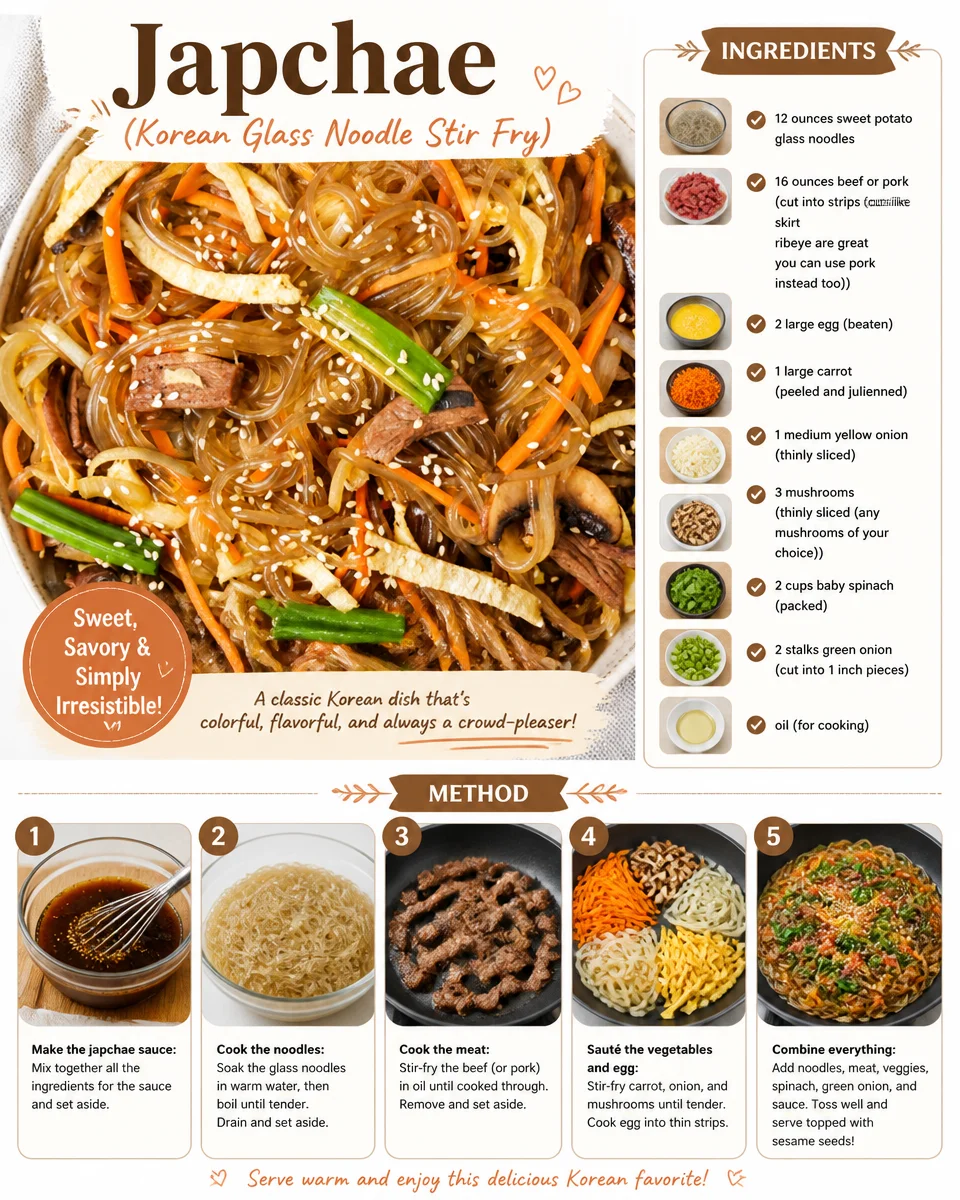
Ingredients Section
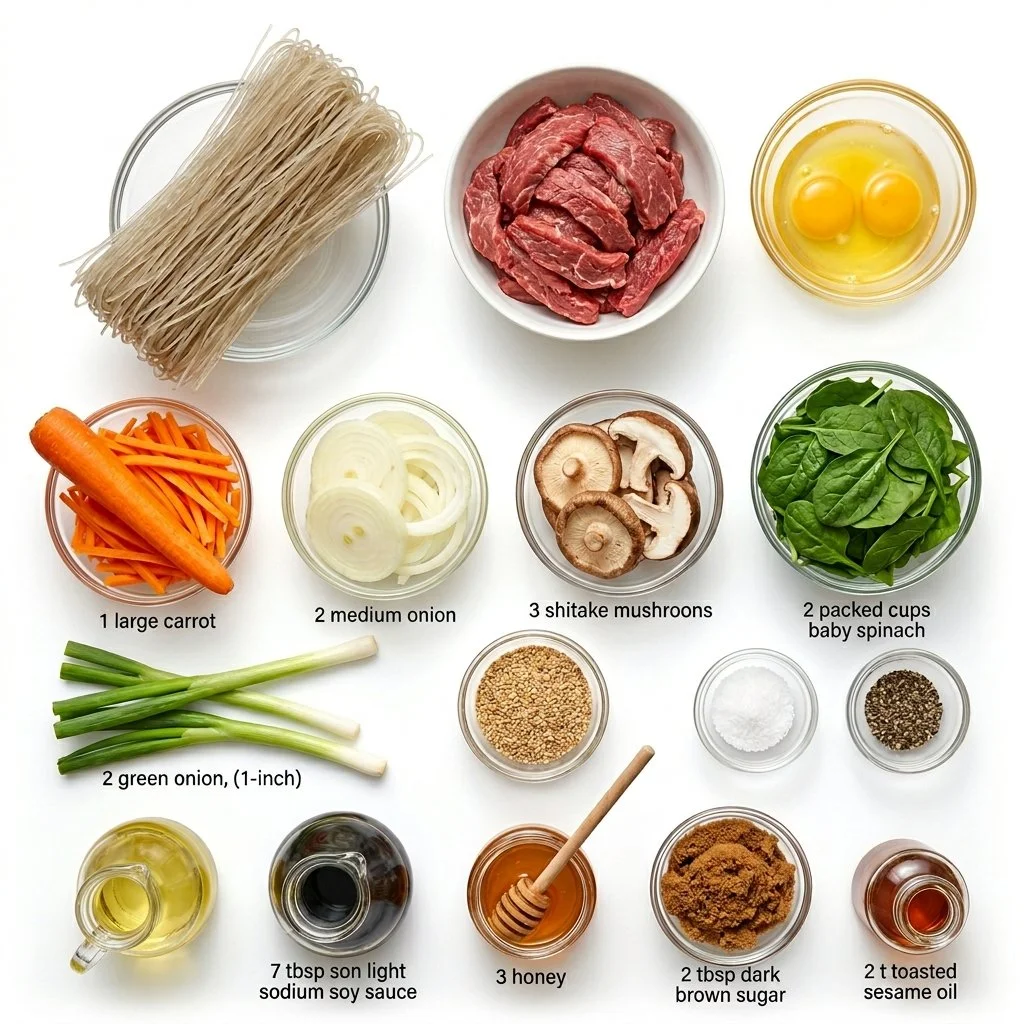
Here’s what you’ll need for this recipe:
- 12 ounces sweet potato glass noodles: Look for these at Asian grocery stores, or online. They have a unique texture unlike other noodles.
- 16 ounces beef or pork: Cut into strips; flank, skirt, or ribeye work well. You can easily swap in pork if you prefer!
- 2 large eggs: Beaten for the egg crepe, which adds a lovely protein boost.
- 1 large carrot: Peeled and julienned for sweetness and color.
- 1 medium yellow onion: Thinly sliced to add a savory foundation.
- 3 mushrooms: Thinly sliced; any variety will work, but shiitake or button are favorites.
- 2 cups baby spinach: Packed for a nutrient boost; you can also use other leafy greens like bok choy or kale.
- 2 stalks green onion: Cut into 1-inch pieces for added flavor.
- Oil for cooking: Use vegetable or sesame oil for a hint of extra flavor.
- Toasted sesame seeds: Optional but recommended for garnish.
- Salt and black pepper: To taste.
- 7 tablespoons soy sauce: Light sodium is preferred for better flavor control.
- 3 tablespoons honey: You can substitute with more brown sugar if needed.
- 2 tablespoons brown sugar: Either light or dark works here.
- 2 tablespoons toasted sesame oil: This adds a beautiful nutty flavor.
Ingredient Notes
- When choosing your beef, opt for cuts that are tender and quick to cook.
- Don’t skip on the toasted sesame oil; it’s the secret sauce that brings everything together.
- You can find good quality glass noodles from brands like Maechook or Bibigo.
Step-by-Step Instructions
Let’s get started on making this delicious Korean Glass Noodle Stir Fry!
1. Make the Japchae Sauce
Mix together all the sauce ingredients: soy sauce, honey, brown sugar, and toasted sesame oil. Set it aside as you’ll add it later.
2. Cook the Japchae Noodles
In a large pot of boiling water, add the japchae noodles. Cook for 10-15 minutes or until al dente, stirring occasionally to prevent sticking. Once cooked, drain, and rinse them under cold water until cooled. Drain again and set aside. Optionally, use kitchen shears to cut them into shorter pieces, making them easier to eat.
3. Make the Egg Crepe
In a large nonstick pan over medium heat, add a small amount of oil. Pour in the beaten eggs, tilting the pan to form a thin layer. Cook until set, flip, and cook the other side briefly. Remove and let cool, then cut into thin strips.
4. Cook the Beef (or Pork)
In the same pan over medium-high heat, add more oil if needed and then the beef. Lightly season with salt and pepper. Sear until golden brown (about 4-5 minutes), remove, and set aside.
5. Sauté the Vegetables
Using the same pan, sauté the vegetables according to their cooking times, starting with the carrots for 15-30 seconds, followed by onions, mushrooms, spinach, and green onion tops. Season lightly with salt and pepper in between.
6. Assemble the Japchae
In a large pan, heat your prepared japchae sauce over medium heat until bubbly. Add the cooked noodles and toss until evenly coated. Then add the sautéed vegetables, beef (or pork), and egg strips. Toss until everything is combined, then remove from heat.
7. Serve
Portion the japchae into bowls or serve family-style with a sprinkle of sesame seeds on top. Japchae can be enjoyed hot, warm, at room temperature, or slightly chilled.
Expert Tips & Troubleshooting
Timing is Key: As you cook each component, make sure to time them well. Start the noodles first, and finish cooking the vegetables last to maintain their crispness.
Storage Recommendations: Leftover japchae can be refrigerated in an airtight container for up to 3 days. Reheat gently in the microwave or on the stovetop.
Make-Ahead Instructions: You can prepare the sauce and chop vegetables a day in advance, making it a breeze to stir-fry when you’re ready!
Common Mistakes: Avoid overcooking the noodles; they should be slightly chewy. If they clump together after rinsing, toss them with a tiny bit of oil to separate.
Flavor Enhancements: Want to elevate the dish? Consider adding garlic or ginger for an aromatic punch.
Serving Suggestions
Korean Glass Noodle Stir Fry pairs beautifully with a side of kimchi—or even a spicy cucumber salad. For added crunch, serve with sesame-crusted green beans or a light vegetable tempura.
Presentation is key! Serve in a large platter or bowl, garnished with a sprinkle of sesame seeds and perhaps a few slices of fresh cucumber on the side for color.
Variations & Substitutions
Feel free to mix up the recipe:
- Flavor Combinations: Try adding a splash of oyster or hoisin sauce for a different twist on flavor.
- Dietary Adaptations: For vegan options, substitute the beef with tofu or tempeh and use chickpea or vegetable-based noodles.
- Seasonal Variations: Feel free to swap in seasonal vegetables like bell peppers in the summer or root veggies in the winter.
Nutrition & Storage Info
- Prep time: 15 minutes
- Cook time: 25 minutes
- Total time: 40 minutes
- Yield: Serves 4-6
- Estimated calories: Approximately 350 calories per serving (this will vary based on specific ingredients used)
- Storage: Once cooled, store leftovers at room temperature for up to 2 hours, then refrigerate. Keeps well for up to 3 days.
FAQ Section
Can I use regular noodles instead of glass noodles?
Yes! While the texture will differ, you can opt for rice noodles or even spaghetti in a pinch.Can I make this dish vegetarian?
Absolutely! Simply replace the meat with tofu or a plant-based protein and add more vegetables.What can I do if my noodles are sticky?
Rinsing them under cold water should help separate them. A splash of oil can also prevent sticking.How do I know if my glass noodles are cooked properly?
They should be translucent and deliver a chewy texture when bitten into.Can I freeze leftover japchae?
Yes, but it’s best enjoyed fresh. If freezing, be aware that the noodles may become softer when reheated.Can I use different meats?
Certainly! Chicken or shrimp also work well in this dish.What’s the difference between sweet potato glass noodles and other noodles?
Sweet potato noodles are gluten-free, chewy, and have a slightly sweet flavor compared to wheat noodles.What do I serve with this dish?
It pairs beautifully with Korean pickled vegetables, a light salad, or meat dishes like bulgogi.Do I have to use an egg crepe?
No! If you prefer a vegan version, you can leave out the eggs entirely.Can I prepare this dish in advance?
Yes! You can prepare the sauce and chop vegetables ahead. Cook everything just before serving for the best texture.
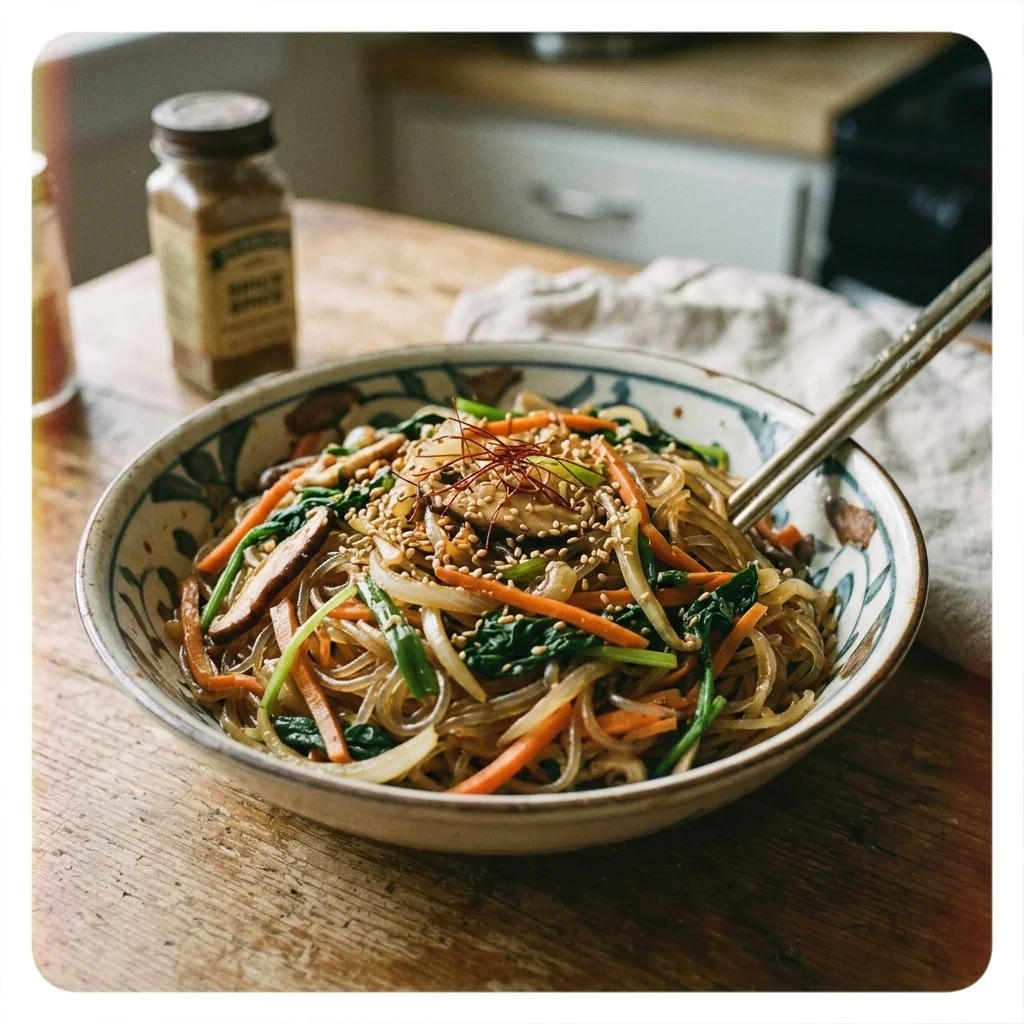
Conclusion
Korean Glass Noodle Stir Fry is truly a dish that carries the warmth of family memories and the joy of cooking. It’s special not only for its delightful flavors and textures but also for the memories you’ll create while preparing it. I encourage you to dive into this recipe and make it your own. Your family and friends will thank you for it!
If you try it out, I’d love to hear your thoughts or any variations you come up with. Don’t forget to check out other related recipes on my blog for more delicious ideas! Happy cooking!
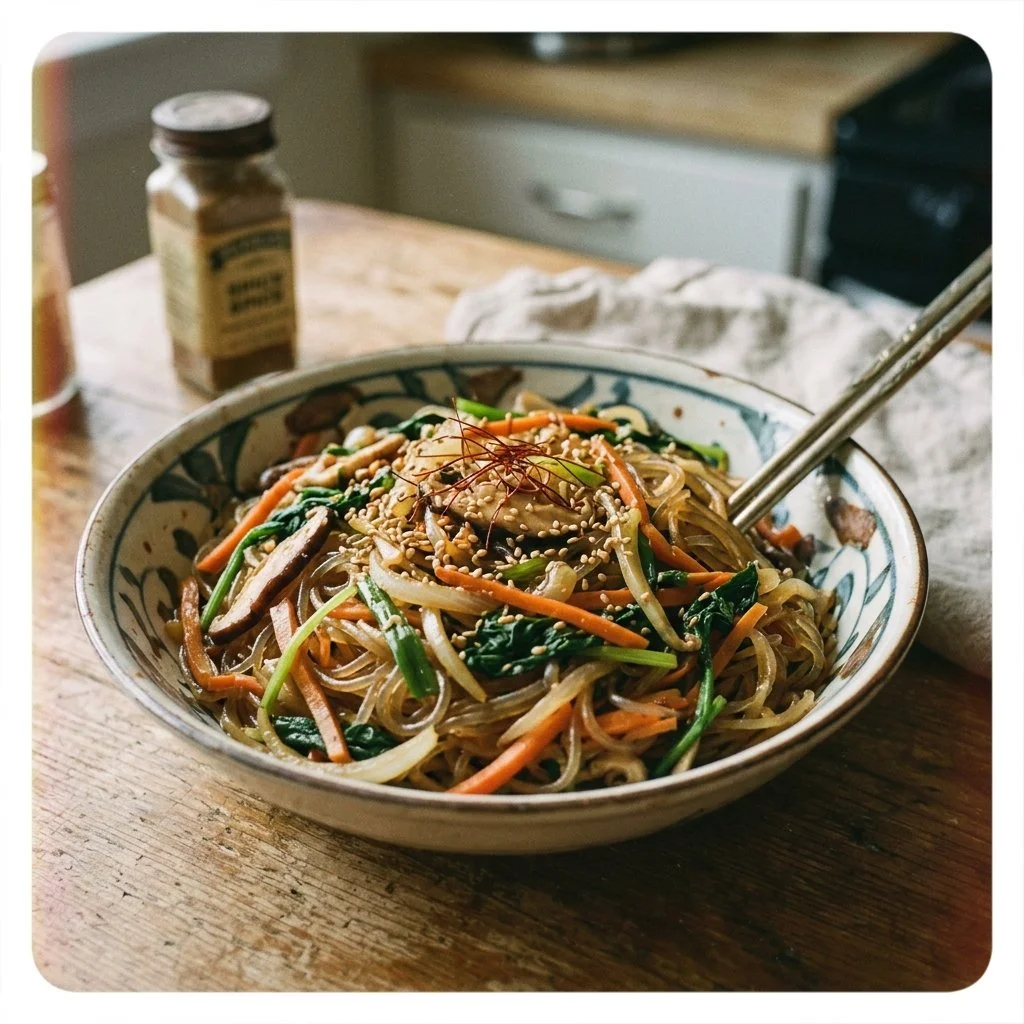
Korean Glass Noodle Stir Fry (Japchae)
Ingredients
Method
- Mix together all the sauce ingredients: soy sauce, honey, brown sugar, and toasted sesame oil. Set it aside.
- In a large pot of boiling water, add the japchae noodles. Cook for 10-15 minutes or until al dente. Drain and rinse under cold water. Set aside.
- In a nonstick pan over medium heat, add oil and pour in beaten eggs to form an egg crepe. Cook until set, flip, and cook the other side briefly. Remove and cut into strips.
- In the same pan, add more oil if needed and cook the beef until golden brown. Remove and set aside.
- Sauté the carrots for 15-30 seconds, then add onions, mushrooms, spinach, and green onions, lightly seasoning with salt and pepper.
- Heat the prepared japchae sauce in a large pan until bubbly. Add the cooked noodles and toss until coated.
- Add the sautéed vegetables, beef, and egg strips. Toss until combined, then remove from heat.
- Portion into bowls or serve family-style with a sprinkle of sesame seeds.